<?xml version="1.0" encoding="utf-8"?><feed xmlns="http://www.w3.org/2005/Atom" ><generator uri="https://jekyllrb.com/" version="3.10.0">Jekyll</generator><link href="/my-blog/feed.xml" rel="self" type="application/atom+xml" /><link href="/my-blog/" rel="alternate" type="text/html" /><updated>2025-04-16T23:14:28+00:00</updated><id>/my-blog/feed.xml</id><title type="html">Eddie Walker, RN</title><subtitle>Blogging my journey into the world of compsci, data, and digital health</subtitle><entry><title type="html">First Subject Completed - Big Health Data!</title><link href="/my-blog/digital%20health,%20uni/2025/03/24/assessment1feedback.html" rel="alternate" type="text/html" title="First Subject Completed - Big Health Data!" /><published>2025-03-24T22:00:00+00:00</published><updated>2025-03-24T22:00:00+00:00</updated><id>/my-blog/digital%20health,%20uni/2025/03/24/assessment1feedback</id><content type="html" xml:base="/my-blog/digital%20health,%20uni/2025/03/24/assessment1feedback.html"><![CDATA[<h1 id="i-have-finished-the-first-subject-in-my-masters">I have finished the first subject in my masters</h1>

<p>First subject is completed…DIG5BDM.</p>

<p>It was a good learning experience and La Trobe online was structured very well….</p>

<p>However,</p>

<p>WIth baby 2 due to popout any day now I’ve decided to take a leave of absence and focus on family for a little while.</p>

<p>I plan to continue my OSSU computer science journey and do more linux mastery so I can get some cybersecurty skills</p>

<p>Cheers! 
Eddie (WTR)</p>]]></content><author><name></name></author><category term="Digital Health, Uni" /><summary type="html"><![CDATA[I have finished the first subject in my masters]]></summary></entry><entry><title type="html">Cyclone Week!(and University week1).</title><link href="/my-blog/uni/2025/03/07/cycloneweek.html" rel="alternate" type="text/html" title="Cyclone Week!(and University week1)." /><published>2025-03-07T02:00:00+00:00</published><updated>2025-03-07T02:00:00+00:00</updated><id>/my-blog/uni/2025/03/07/cycloneweek</id><content type="html" xml:base="/my-blog/uni/2025/03/07/cycloneweek.html"><![CDATA[<h1 id="cyclone-week">CYCLONE WEEK!</h1>

<p>cyclone alfred is on his way here, for the first time in decades…we bought a house that survived the 1974 cyclone…it was only 4 years old at the time, hopefully damage is limited to the old shed out back…</p>

<p>all this cyclone prep has been very distracting…</p>

<h3 id="week-1-begins">week 1 begins</h3>

<p>At home today and I have just participated in our first online tutorial for DIG5BDM…big data management in healthcare…</p>

<p>Assessment 1 is about the Victorian Admitted Episodes Dataset (which captures data on all hospital admissions in Victoria…this is utilised primarily as a funding instrument, and then for health service planning and research..I think) we have to record a video of our presentation and upload in a little over a week…</p>

<p>My progress has been ok, have read through the first two sections and taken notes as I went. Formatted a presentation using libre impress on linux, seems pretty good.</p>

<p>my plan is to record the presentation on teams and use my tablet to share the powerpoint screen, that way I can annotate on it as I go…</p>

<p>I am up to the last step on the assessment which is identifying potential research questions using the VAED, I am researching novel uses of digital health datasets in contemporary research and hoping that is going in the right direction, just waiting on clarifying with the teaching team before I go ahead too far…</p>

<p>Now working on week 2 content.</p>

<p>Cheers,</p>

<p>Eddie (WTR)</p>]]></content><author><name></name></author><category term="uni" /><summary type="html"><![CDATA[CYCLONE WEEK!]]></summary></entry><entry><title type="html">Studying at Everton Park Library</title><link href="/my-blog/uni/2025/02/21/Week1_BigDataHealth.html" rel="alternate" type="text/html" title="Studying at Everton Park Library" /><published>2025-02-21T02:00:00+00:00</published><updated>2025-02-21T02:00:00+00:00</updated><id>/my-blog/uni/2025/02/21/Week1_BigDataHealth</id><content type="html" xml:base="/my-blog/uni/2025/02/21/Week1_BigDataHealth.html"><![CDATA[<h1 id="blog-maintenance">blog maintenance!</h1>
<p>studying at everton park library today, 
had to reclone my blog from git after doing a fresh ubuntu install (firmware update broke my XPS…cheers Dell). So definitely a bit of time wasting happening with SSH keys. I’ve done this a few times now, and it is getting easier to understand how ssh keys etc. work…mostly installing linux and using overthewire.org wargames has helped with feeling confident and familiar…</p>

<h2 id="everon-park-library">Everon Park Library</h2>
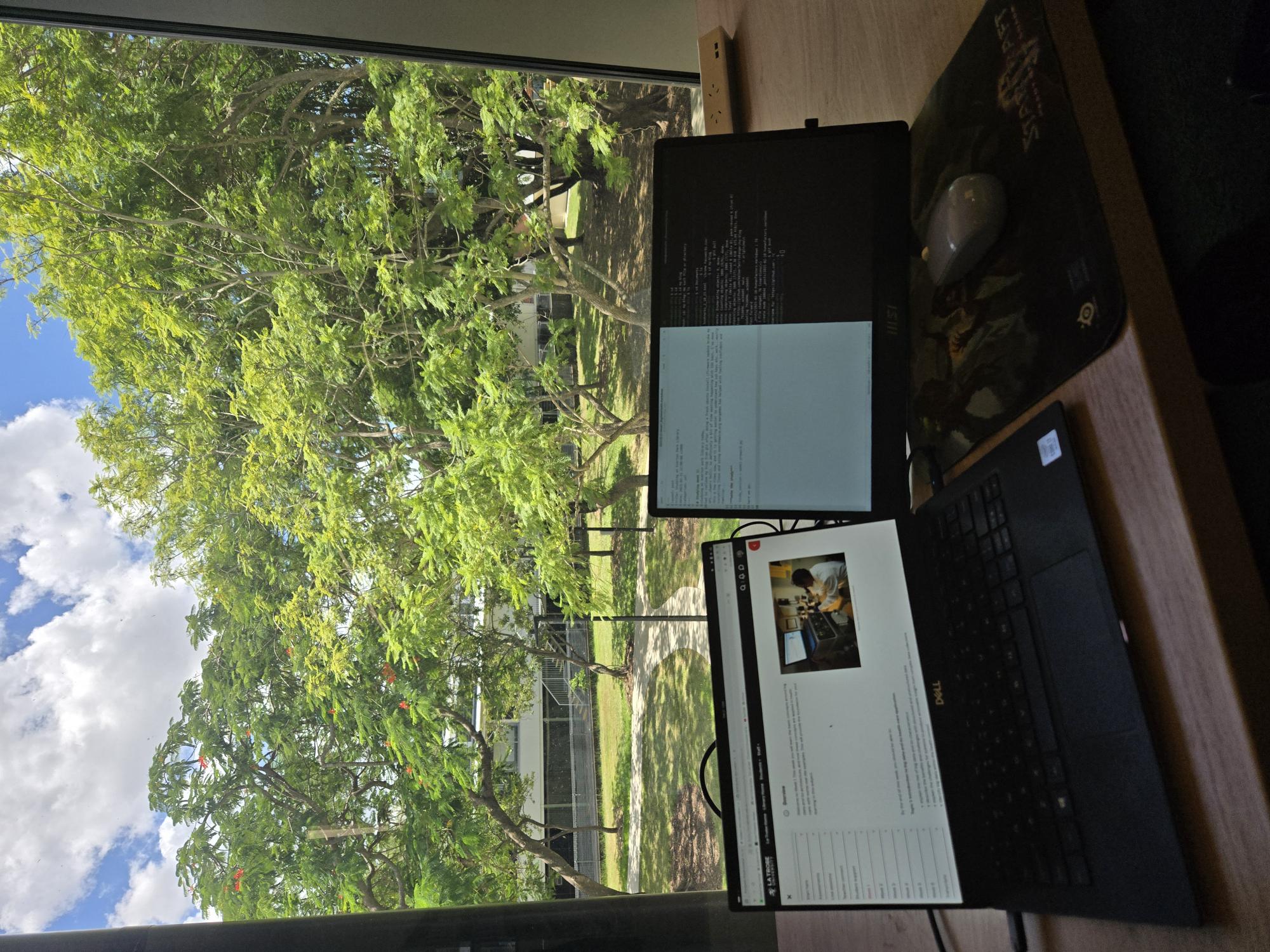
<p>really good, has a quiet room over to the side, big windows with a desk that has some nice greenery to keep you sane. quiet room looks good but the desk doesn’t look out the window…maybe bring noise cancelling headphones if it is busy…here is a photo</p>

<p><img src="https://walkertetrisranger.github.io/my-blog/assets/images/eplibrary.jpg" width="600" style="border-radius: 8px;" /></p>

<p><strong><em>onto the study</em></strong></p>

<p><code class="language-plaintext highlighter-rouge">study_session = week1-prework.py</code></p>

<p>here we go.</p>

<p><em>sidebar:</em> Studying with Gandalf is great for some background music to study to…one of the guys I worked with mentioned Gandalf studied for 17years to discover the true origins of the ring in Bilbo’s posession!</p>

<h2 id="week-1">week 1</h2>
<p>“typing out my notes so I am doing something with the information instead of just passively reading it…</p>

<p>by the end of this week we have 2 topics to understand…these contribute to one of the main learning objectives in the course. An intro to big data and how its applied in healthcare, and the software/architecture used to store and access big data…</p>

<p>not going to include all of my notes…as I don’t want to get pinged by uni…but I can at least summarise my thoughts etc using the blog…</p>]]></content><author><name></name></author><category term="uni" /><summary type="html"><![CDATA[blog maintenance! studying at everton park library today, had to reclone my blog from git after doing a fresh ubuntu install (firmware update broke my XPS…cheers Dell). So definitely a bit of time wasting happening with SSH keys. I’ve done this a few times now, and it is getting easier to understand how ssh keys etc. work…mostly installing linux and using overthewire.org wargames has helped with feeling confident and familiar…]]></summary></entry><entry><title type="html">human factors in incident analysis</title><link href="/my-blog/2025/02/09/humanfactors.html" rel="alternate" type="text/html" title="human factors in incident analysis" /><published>2025-02-09T14:00:00+00:00</published><updated>2025-02-09T14:00:00+00:00</updated><id>/my-blog/2025/02/09/humanfactors</id><content type="html" xml:base="/my-blog/2025/02/09/humanfactors.html"><![CDATA[<h1 id="human-factors-in-incident-analysis">Human Factors in Incident Analysis</h1>

<p>A step away from compsci/digital health in this post…<br />
I have found that doing these posts is actually a good way of forcing myself to write concise notes…and I think it is helping me learn…</p>

<p>So if anybody is reading this…I am doing some incident analysis CPD for nursing at the moment, enjoy!</p>

<h2 id="lect-outline">lect outline</h2>
<ol>
  <li>What is Human Factors?</li>
  <li>Healthcare challenge</li>
  <li>HF approach to root cause analysis</li>
  <li>Case studies: using HF to understand risk, inform procurement and respond to near-misses</li>
  <li>Barriers to HF adoption in healthcare</li>
  <li>HF methods and resources</li>
</ol>

<h3 id="what-is-human-factors">What is Human Factors?</h3>
<p>“concerned with the understanding of interactions among humans and other elements of a system. A profession that applies theory, principles, data, and methods to design in order to optimise human well-being and overall system performance”.</p>

<h3 id="core-skillsets-for-human-factors-professionals">Core skillsets for human factors professionals</h3>
<ul>
  <li>cognitive ergonomics
    <ul>
      <li>fit between human cognition and machine/task/environment</li>
    </ul>
  </li>
  <li>organisation ergonomics
    <ul>
      <li>design and optimisation of the overall sociotechnical system….e.g. org structures, policies, processes</li>
    </ul>
  </li>
  <li>Physical ergonomics
    <ul>
      <li>fit between human body responses to physical and physiological work demands</li>
    </ul>
  </li>
</ul>

<h3 id="challenge-in-healthcare">Challenge in healthcare</h3>
<p><code class="language-plaintext highlighter-rouge">healthcare = str(complex adaptive system, numerous stakeholders, operates at distinctive yet interconnected levels within the system)</code></p>
<ul>
  <li>health systems don’t react predictably to the same inputs</li>
  <li>much effort is spent trying to ‘stomp out’ error after harm</li>
</ul>

<p>Clinical incidents <em>may</em> be caused by:</p>
<ul>
  <li>interactions between multiple actors; and not just clinical staff</li>
  <li>multiple interaction contributing factors from across all levels of the system</li>
  <li>lack of vertical integration/feedback between hierarchical levels<br />
(e.g. frontline does not inform higher level decisions, higher level decisions not reflected in practices at frontline).</li>
  <li>financial, psychological and other pressures</li>
  <li>gradual erosion of risk controls over time</li>
</ul>

<h3 id="rca">RCA</h3>
<p>undertaken to review care and find out what went wrong and why…</p>

<p>Inefective analyses:<br />
check out: RCA<em>*2 - improving root cause analyses and actions to prevent harm…www.npsf.org<br />
*Includes</em> five rules of causation…</p>

<h3 id="case-examplenicu-heparinised-syringes">Case Example…NICU heparinised syringes…</h3>
<p>“the product is often part of a system composed of other products…end user complexity depends on all products in users environment…”</p>

<h3 id="example-methods-and-resources">Example methods and resources…</h3>
<ol>
  <li>cognitive walkthrough</li>
  <li>observational field work</li>
  <li>Simulation studies</li>
</ol>

<p>good lecture all in all,</p>

<p>very relevant case examples for analysing clinical incidents in the workplace….</p>

<p>Eddie(WTR)</p>]]></content><author><name></name></author><summary type="html"><![CDATA[Human Factors in Incident Analysis A step away from compsci/digital health in this post… I have found that doing these posts is actually a good way of forcing myself to write concise notes…and I think it is helping me learn… So if anybody is reading this…I am doing some incident analysis CPD for nursing at the moment, enjoy! lect outline What is Human Factors? Healthcare challenge HF approach to root cause analysis Case studies: using HF to understand risk, inform procurement and respond to near-misses Barriers to HF adoption in healthcare HF methods and resources What is Human Factors? “concerned with the understanding of interactions among humans and other elements of a system. A profession that applies theory, principles, data, and methods to design in order to optimise human well-being and overall system performance”. Core skillsets for human factors professionals cognitive ergonomics fit between human cognition and machine/task/environment organisation ergonomics design and optimisation of the overall sociotechnical system….e.g. org structures, policies, processes Physical ergonomics fit between human body responses to physical and physiological work demands Challenge in healthcare healthcare = str(complex adaptive system, numerous stakeholders, operates at distinctive yet interconnected levels within the system) health systems don’t react predictably to the same inputs much effort is spent trying to ‘stomp out’ error after harm Clinical incidents may be caused by: interactions between multiple actors; and not just clinical staff multiple interaction contributing factors from across all levels of the system lack of vertical integration/feedback between hierarchical levels (e.g. frontline does not inform higher level decisions, higher level decisions not reflected in practices at frontline). financial, psychological and other pressures gradual erosion of risk controls over time RCA undertaken to review care and find out what went wrong and why… Inefective analyses: check out: RCA*2 - improving root cause analyses and actions to prevent harm…www.npsf.org *Includes five rules of causation… Case Example…NICU heparinised syringes… “the product is often part of a system composed of other products…end user complexity depends on all products in users environment…” Example methods and resources… cognitive walkthrough observational field work Simulation studies good lecture all in all, very relevant case examples for analysing clinical incidents in the workplace…. Eddie(WTR)]]></summary></entry><entry><title type="html">human factors in incident analysis</title><link href="/my-blog/2025/02/09/humanfactors.markdown.txt" rel="alternate" type="text/html" title="human factors in incident analysis" /><published>2025-02-09T14:00:00+00:00</published><updated>2025-02-09T14:00:00+00:00</updated><id>/my-blog/2025/02/09/humanfactors.markdown</id><content type="html" xml:base="/my-blog/2025/02/09/humanfactors.markdown.txt"><![CDATA[# Human Factors in Incident Analysis

A step away from compsci/digital health in this post...  
I have found that doing these posts is actually a good way of forcing myself to write concise notes...and I think it is helping me learn...  


So if anybody is reading this...I am doing some incident analysis CPD for nursing at the moment, enjoy! 

## lect outline  
1. What is Human Factors?
2. Healthcare challenge
3. HF approach to root cause analysis
4. Case studies: using HF to understand risk, inform procurement and respond to near-misses
5. Barriers to HF adoption in healthcare
6. HF methods and resources


### What is Human Factors?  
"concerned with the understanding of interactions among humans and other elements of a system. A profession that applies theory, principles, data, and methods to design in order to optimise human well-being and overall system performance".


### Core skillsets for human factors professionals
- cognitive ergonomics
	+ fit between human cognition and machine/task/environment 
- organisation ergonomics
	+ design and optimisation of the overall sociotechnical system....e.g. org structures, policies, processes
- Physical ergonomics
	+ fit between human body responses to physical and physiological work demands

### Challenge in healthcare  
`healthcare = str(complex adaptive system, numerous stakeholders, operates at distinctive yet interconnected levels within the system)`
- health systems don't react predictably to the same inputs 
- much effort is spent trying to 'stomp out' error after harm


Clinical incidents *may* be caused by: 
- interactions between multiple actors; and not just clinical staff
- multiple interaction contributing factors from across all levels of the system
- lack of vertical integration/feedback between hierarchical levels  
(e.g. frontline does not inform higher level decisions, higher level decisions not reflected in practices at frontline). 
- financial, psychological and other pressures
- gradual erosion of risk controls over time


### RCA
undertaken to review care and find out what went wrong and why...

Inefective analyses:  
check out: RCA**2 - improving root cause analyses and actions to prevent harm...www.npsf.org  
*Includes* five rules of causation...


### Case Example...NICU heparinised syringes...
"the product is often part of a system composed of other products...end user complexity depends on all products in users environment..."  


### Example methods and resources...
1. cognitive walkthrough
2. observational field work
3. Simulation studies

good lecture all in all, 

very relevant case examples for analysing clinical incidents in the workplace....

Eddie(WTR)]]></content><author><name></name></author><summary type="html"><![CDATA[# Human Factors in Incident Analysis]]></summary></entry><entry><title type="html">Bisection Search in Python</title><link href="/my-blog/python,/mit/2025/02/03/bisectionsearch.html" rel="alternate" type="text/html" title="Bisection Search in Python" /><published>2025-02-03T01:00:00+00:00</published><updated>2025-02-03T01:00:00+00:00</updated><id>/my-blog/python,/mit/2025/02/03/bisectionsearch</id><content type="html" xml:base="/my-blog/python,/mit/2025/02/03/bisectionsearch.html"><![CDATA[<p>#BISECTION SEARCHING - LECTURE 6 (MIT 600L)</p>

<p>Recap from lecture 5: 
-floating point numbers are hard for approximation.</p>
<ul>
  <li>can’t be represented as exact values in memory.
    <ul>
      <li>operations on these approxiamted floats introduce tiny areas.</li>
      <li>errors are quickly magnified over the course of a few operations…</li>
    </ul>
  </li>
  <li>guess and check: enumerates ints(integers) one at a time and checks if the solution is correct.</li>
  <li><em>approximation methods</em> enumerate using a float increment.
    <ul>
      <li>checking a solution is not possible.</li>
      <li>checking whether a solution yields a <em>value within epsilon</em> is possible.</li>
    </ul>
  </li>
</ul>

<p>###what is besection search?</p>

<p>apply it to <strong><em>problems with an inherent order</em></strong> to the range of possible answers. 
e.g. we know that the answer lies inside an interval between numbers…
    + guess <strong><em>midpoint</em></strong> of interval.
    + if not the answer, check if <strong><em>answer is greater than or less than</em></strong> midpoint. 
    + <strong><em>change</em></strong> interval (new interval between midpoint and boundary (high or low). 
    + repeat</p>

<p>This process <strong><em>cuts set of things to check in half</em></strong> at each step.
    - exhaustive searching reduces the number of objects to check by n-1 each step.
    - bisection search reduces them from N to N/2.</p>

<p>##Recall the approximation method code to find the square root</p>

<div class="language-plaintext highlighter-rouge"><div class="highlight"><pre class="highlight"><code># x = 54321
# epsilon = 0.001
# num_guesses = 0
# guess = 0.0
# increment = 0.00001   # try it with 0.00001
# while abs(guess**2 - x) &gt;= epsilon and guess**2 &lt;= x:
#     # abs(guess**2 - x) &gt;= epsilon finds a "good enough" answer
#     # guess**2 &lt;= x ensures we stop looking when the guess becomes unreasonable
#     guess += increment
#     num_guesses += 1
# print(f'num_guesses = {num_guesses}')

# # this "if" is for the case when we stopped the loop due to an unreasonable guess
# if abs(guess**2 - x) &gt;= epsilon:
#     print(f'Failed on square root of {x}')
#     print(f'Last guess was {guess}')
#     print(f'Last guess squared is {guess*guess}')
# # this "else" is for the case when we stopped the loop due to being within epsilon of x
# else:
#     print(f'{guess} is close to square root of {x}')
</code></pre></div></div>

<p>##BISECTION ALGORITHM</p>

<div class="language-plaintext highlighter-rouge"><div class="highlight"><pre class="highlight"><code>#####################
## EXAMPLE: fast square root using bisection search
#####################

x = 54321  # try 0.5
epsilon = 0.01
num_guesses = 0
low = 0.0
high = x
guess = (high + low)/2

while abs(guess**2 - x) &gt;= epsilon:
    # uncomment to see each step's guess, high, and low 
    #print(f'low = {str(low)} high = {str(high)} guess = {str(guess)}')
    if guess**2 &lt; x:
        low = guess
    else:
        high = guess
    guess = (high + low)/2.0
    num_guesses += 1
print(f'num_guesses = {str(num_guesses)}')
print(f'{str(guess)} is close to square root of {str(x)}')

</code></pre></div></div>

<p>On of the finger exercises was to write a bisection search that would find the cube root of any given number…</p>

<div class="language-plaintext highlighter-rouge"><div class="highlight"><pre class="highlight"><code>cube = 27
epsilon = 0.0000000000001
low = 0
high = cube
guess = (high+low)/2
num_guess = 0

while abs(guess**3 - cube) &gt;= epsilon: 
    print(f'low = {low} high = {high} guess = {guess}')
    if guess**3 &lt; cube:
        low = guess 
    else: 
        high = guess
    guess = (high+low)/2
    num_guess += 1
print(f'{guess} is close to cube root of {cube}')
print(f'guesses made:{num_guess}')
</code></pre></div></div>

<p>Initially I had an infinite loop and realised that I had made an error and was not bisecting the search results…realised by imbedding the print function within the while loop.<br />
Apparently there is another way to achieve the same results…</p>

<div class="language-plaintext highlighter-rouge"><div class="highlight"><pre class="highlight"><code>########################
## EXAMPLE: Newton-Raphson to find roots
######################
# epsilon = 0.01
# k = 24  # try 54321
# guess = k/2.0
# num_guesses = 0

# while abs(guess*guess - k) &gt;= epsilon:
#     num_guesses += 1
#     guess = guess - (((guess**2) - k)/(2*guess))
# print(f'num_guesses = {str(num_guesses)}')
# print(f'Square root of {str(k)} is about {str(guess)}')
</code></pre></div></div>]]></content><author><name></name></author><category term="python," /><category term="MIT" /><summary type="html"><![CDATA[#BISECTION SEARCHING - LECTURE 6 (MIT 600L)]]></summary></entry><entry><title type="html">MIT Lecture 5. Floats and Aprroximation Methods</title><link href="/my-blog/python,/compsci,/nightshift/2025/01/25/600Lecture5.html" rel="alternate" type="text/html" title="MIT Lecture 5. Floats and Aprroximation Methods" /><published>2025-01-25T14:00:00+00:00</published><updated>2025-01-25T14:00:00+00:00</updated><id>/my-blog/python,/compsci,/nightshift/2025/01/25/600Lecture5</id><content type="html" xml:base="/my-blog/python,/compsci,/nightshift/2025/01/25/600Lecture5.html"><![CDATA[<h1 id="ossu-comp-sci">OSSU comp sci</h1>

<h2 id="mit-6100l-intro-to-cs-and-programming-using-python">MIT 6.100L Intro to CS and Programming using Python</h2>

<p><a href="https://www.youtube.com/watch?v=OF2sr5e7PrY&amp;t=1s">lecture 5 - Floats and Approximation Methods</a></p>

<p>I’ve already covered some of this content in datacamp, but the different presentation style and being given more finger exercises is really useful.</p>

<p>This is an archived course, but you can access the lecture code and work through alongside the lecturer. I find working using an IDE adds a certain something to the learning.</p>

<p><em>sidebar:</em> I replaced the battery on this dell xps and am really happy with the way it runs using linux mint.</p>

<p>##Lecture Notes</p>

<p><strong>prev lecture recap:</strong><br />
Talking about Binary numbers…<br />
a way to convert base 10 numbers into base 2 so we can deal with numbers that aren’t nice tidy integers.<br />
for example…</p>
<div class="language-plaintext highlighter-rouge"><div class="highlight"><pre class="highlight"><code>x = 0
for i in ranger(10: 
	x += 0.1
print(x==1)
print(x, '==', 10*0.1)
</code></pre></div></div>

<p>this comes back with 0.9999999999999999 == 1 which is FALSE.<br />
so we convert base10 to base2 numbers -&gt; binary numbers which is how the computer reads things.</p>

<div class="language-plaintext highlighter-rouge"><div class="highlight"><pre class="highlight"><code>if num &lt; 0:
	is_neg = True
	num = abs(num)
else:
	is_neg = False

result = ''
if num == 0:
	result = '0'

while num &gt; 0:
	result = str(num%2) + result
	num = num//2

if is_neg:
	result = '-' + result
</code></pre></div></div>

<p>Each time this code passes it divides a number (example 19) by 2 and adds the remainder (either 0 or 1) to the front of the string. The string left at the end is the binary number!</p>

<p>so in the case of 19 the binary representation is 10011:</p>

<p>19/2 = 1 leftover<br />
9/2 = 1 leftover<br />
4/2 = 0 leftover<br />
2/2 = 0 leftover<br />
1/2 = 1 leftover</p>

<h1 id="what-about-fractions">What about fractions??</h1>

<p>i’m fading, doing this on break during nightshift and i’m too tired…going to just watch the lecture and go back to take notes…night!</p>

<p>Eddie(WTR)</p>]]></content><author><name></name></author><category term="python," /><category term="compsci," /><category term="nightshift" /><summary type="html"><![CDATA[OSSU comp sci MIT 6.100L Intro to CS and Programming using Python lecture 5 - Floats and Approximation Methods I’ve already covered some of this content in datacamp, but the different presentation style and being given more finger exercises is really useful. This is an archived course, but you can access the lecture code and work through alongside the lecturer. I find working using an IDE adds a certain something to the learning.]]></summary></entry><entry><title type="html">Master of Digital Health at Latrobe!</title><link href="/my-blog/blogging,/beginning,/digital/health/2025/01/24/masters.html" rel="alternate" type="text/html" title="Master of Digital Health at Latrobe!" /><published>2025-01-24T01:10:00+00:00</published><updated>2025-01-24T01:10:00+00:00</updated><id>/my-blog/blogging,/beginning,/digital/health/2025/01/24/masters</id><content type="html" xml:base="/my-blog/blogging,/beginning,/digital/health/2025/01/24/masters.html"><![CDATA[<h1 id="enrolled-in-subject-number-1">Enrolled in Subject Number 1!</h1>

<p>I have enrolled in the master of digital health at latrobe and can’t wait to dive in.</p>

<p>Hopefully the OSSU work and Datacamp work has prepped me well for the Comp Sci components.</p>

<p>I must admit that I was VERY tempted to select the cybersecurity specialisation, but I figure I can get what I want out of resources like overthewire.org and focus on formal subjects that open up new jobs and career progression in the health sector.</p>

<p><strong>Term 2</strong> 
begins March…</p>

<p>The first subject is <em>Big Data and Health Analytics</em> which is something I am very passionate about, expecially for driving efficiency and change at the ward unit level operationally, optimising patient flow, and hopefully pushing our hospitals here in QLd to front as role models for health systems.</p>

<p>I dream of a time when everyone walks into and out of work with pride knowing they are helping the community whilst feeling safe and valued. Maybe one day we can be in the enviable position of having other health systems ask “how did you do that?”.</p>

<h3 id="how-far-behind-are-we">how far behind are we?</h3>

<p>current year: <em>2025</em> <br />
first digital hospital opened in Australia: <em>2014</em> (here in Qld)</p>

<p>So only 11 years behind ourselves so far.</p>

<p>I got curious and wondered when the first digital hospital was opened, which seems to be a bit trickier to tease out…however, the Donauspital in Vienna was opened in 1992!</p>

<p>Two years after I was born one of the first fully digitised hospitals opened…</p>

<p>I turn 35 tomorrow, and we are still pulling paper charts and spending inoordinate amounts of time trying to track them down around the ward.</p>

<p><a href="https://healthcare-in-europe.com/en/news/europe-s-first-fully-digitised-hospital.html#:~:text=Way%20back%20in%201988%2C%20Professor,first%2C%20fully%2Ddigitised%20hospital.">The Donauspital - Vienna</a></p>

<p>Eddie(WTR)</p>]]></content><author><name></name></author><category term="blogging," /><category term="beginning," /><category term="digital" /><category term="health" /><summary type="html"><![CDATA[Enrolled in Subject Number 1!]]></summary></entry><entry><title type="html">linux Dive</title><link href="/my-blog/blogging,/beginning,/libraries,/travel/2025/01/20/Linux-inevitable.html" rel="alternate" type="text/html" title="linux Dive" /><published>2025-01-20T11:24:00+00:00</published><updated>2025-01-20T11:24:00+00:00</updated><id>/my-blog/blogging,/beginning,/libraries,/travel/2025/01/20/Linux-inevitable</id><content type="html" xml:base="/my-blog/blogging,/beginning,/libraries,/travel/2025/01/20/Linux-inevitable.html"><![CDATA[<h2 id="diving-into-linux">Diving into Linux</h2>

<h3 id="learning-linux-via-overthewireorg-wargames">learning linux via overthewire.org wargames</h3>

<p>It was probably inevitable but I have taken the dive into using linux. I got an old XPS 13 and am replacing the battery.</p>

<p>So far I have tried Ubuntu LTS and am now on linux mint…everything works without installing any extra drivers.</p>

<p>Just did a nightshift and work tomorrow morning so no study, just playing for now. Messing about with installing Kali linux on a virtual machine.</p>

<p>over the wire has been great, but I am very slow! the discord helps.</p>

<p>Eddie(WTR)</p>]]></content><author><name></name></author><category term="blogging," /><category term="beginning," /><category term="libraries," /><category term="travel" /><summary type="html"><![CDATA[Diving into Linux]]></summary></entry><entry><title type="html">Working with pivot tables</title><link href="/my-blog/blogging,/beginning,/libraries,/travel/2025/01/14/Pivot-Tables.html" rel="alternate" type="text/html" title="Working with pivot tables" /><published>2025-01-14T10:00:00+00:00</published><updated>2025-01-14T10:00:00+00:00</updated><id>/my-blog/blogging,/beginning,/libraries,/travel/2025/01/14/Pivot-Tables</id><content type="html" xml:base="/my-blog/blogging,/beginning,/libraries,/travel/2025/01/14/Pivot-Tables.html"><![CDATA[<h2 id="pivot-tables-in-pandas">Pivot tables in pandas</h2>

<p>Notes from datacamp lesson…I have found taking notes in a markdown file and creating as a post at the same time as the lesson has really helped with learning and recall.</p>

<p><em>Subsetting and calculations with pivot tables</em></p>

<p>how to call pivot tables:</p>

<div class="language-plaintext highlighter-rouge"><div class="highlight"><pre class="highlight"><code>df.pivot_table("column name containing numerical values to aggregate", index="columns to group by and display in rows", columns="columns to display as columns")
</code></pre></div></div>

<p>Pivot tables are dataframes with sorted indexes…</p>

<p>therefore can use loc and iloc on saved sorted dataframes…</p>

<p>e.g.</p>

<div class="language-plaintext highlighter-rouge"><div class="highlight"><pre class="highlight"><code>df_sorted = df.pivot_table("value", index=, column=)
df_sorted.loc["rows", "columns"]
#slicing is particularly good for subsetting pivot tables
df_sorted.loc["row : row"]
  
</code></pre></div></div>

<p>methods for summary statistics…</p>

<p>e.g. <code class="language-plaintext highlighter-rouge">.mean()</code></p>

<p>have an axis function <code class="language-plaintext highlighter-rouge">df_sorted.mean(axis=)</code> default value is “index” which calculates across rows (if axis isn’t specified it will default to index).</p>

<p>Time to play with pivot tables apparently,</p>

<p>Eddie(WTR)</p>]]></content><author><name></name></author><category term="blogging," /><category term="beginning," /><category term="libraries," /><category term="travel" /><summary type="html"><![CDATA[Pivot tables in pandas]]></summary></entry></feed>